Deep Vein Thrombosis & Pulmonary Embolism
Conditions

Deep Vein Thrombosis & Pulmonary Embolism

Blood clots in the legs or lungs: symptoms, urgent warning signs, tests, blood thinners and recovery. DVT and PE care with Dr. Kulin Sheth, Ahmedabad.

Deep Vein Thrombosis & Pulmonary Embolism

Deep Vein Thrombosis & Pulmonary Embolism: Blood Clots in the Veins and Lungs

Sudden unexplained breathlessness, chest pain, coughing up blood or fainting needs emergency assessment. Go to the nearest emergency department. Do not wait for a clinic appointment, WhatsApp reply or second opinion.

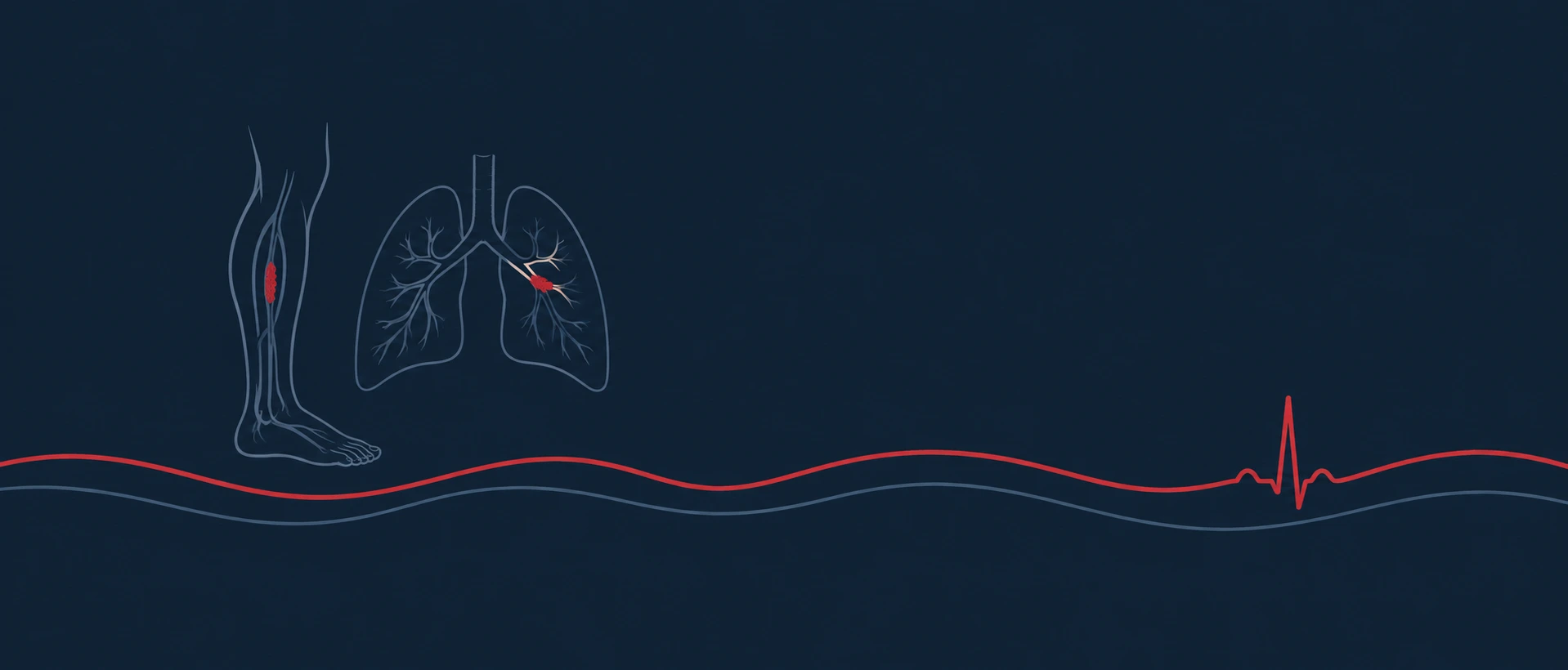
  • Deep vein thrombosis (DVT): a blood clot in a deep vein, usually in the leg or pelvis, which can cause swelling and pain.
  • Pulmonary embolism (PE): part of a clot travels to the lungs and blocks a lung artery.

Together, these are called venous thromboembolism (VTE). Treatment prevents clot growth and further clots while supporting recovery.

Dr. Kulin Sheth treats DVT and PE, including personally performing catheter-based clot removal when appropriate.

  • Consultations and follow-up: Sheth Heart Clinic, Bopal.
  • Procedures: Apollo CVHF Hospital, Bodakdev.
  • Critically ill patients: care with the critical care team.


What symptoms should I watch for?

A clot in a deep veinA clot in the lungs
New swelling, usually in one legSudden or unexplained breathlessness
Pain or tenderness in the calf or thighChest pain, sometimes worse on breathing in
Warmth, redness or darker skin over the affected areaFast heartbeat, coughing up blood, dizziness or fainting
Sometimes few obvious symptomsCan occur without noticeable leg symptoms
  • New unexplained one-sided swelling or pain: seek urgent assessment, ideally the same day. Do not assume muscle strain.
  • Rapidly worsening swelling, severe pain or a blue, pale or cold leg: seek emergency care immediately.
  • Symptoms alone cannot confirm or exclude a clot. PE can be serious without leg pain.


Why do these clots happen?

Clots are more likely when blood flow slows, veins are injured or blood becomes more prone to clotting. Risk factors include:

  • Recent surgery, hospital admission, injury, a leg cast or prolonged bed rest.
  • Long periods of limited movement, including extended car, train or air travel.
  • Cancer and some cancer treatments.
  • Pregnancy and the period after delivery.
  • Oestrogen-containing contraceptives or hormone treatment.
  • A previous clot, family history or an inherited tendency to clot.
  • Older age and obesity.
  • Sometimes there is no clear temporary trigger, which affects recurrence risk and treatment duration.
  • DVT differs from a cholesterol-related heart artery blockage and needs different treatment.


How is DVT or PE diagnosed?

Your symptoms, history and examination guide testing and urgency.

  • Leg ultrasound (venous Doppler): looks for clot. A negative scan may need repeating or further imaging if suspicion remains, particularly for pelvic veins.
  • D-dimer blood test: helps exclude clot in selected patients alongside clinical assessment. A raised result does not prove DVT or PE; illness and pregnancy can also raise it.
  • Computed tomography (CT) pulmonary angiography: uses contrast to look for lung artery clots. Kidney function, contrast allergy and pregnancy affect scan choice; a ventilation–perfusion lung scan may be an alternative.
  • Heart tests: an electrocardiogram (ECG), heart ultrasound (echocardiogram or echo) and blood tests assess heart strain or other causes. A normal ECG or echo alone cannot exclude PE.

For PE, treatment also depends on oxygen levels, blood pressure, heart strain and other illnesses, rather than clot size or one blood result alone.


Will blood thinners treat the clot?

Anticoagulants, commonly called blood thinners, are the main treatment for most patients.

  • They prevent further clot formation while the body gradually deals with existing clot; they do not remove it immediately.
  • Treatment may use injections, tablets or both: heparin, direct oral anticoagulants such as apixaban or rivaroxaban, or warfarin.
  • Choice depends on kidney function, pregnancy, cancer, bleeding risk, other medicines and clotting disorders.
  • Aspirin and clopidogrel are different medicines, not substitutes. If already prescribed, the team reviews the combination. Do not change them yourself.
  • Uncomplicated DVT and carefully assessed low-risk PE may be treated outside hospital. Instability, significant heart or breathing problems, or closer monitoring require hospital care.


How long will I need treatment?

“Doctor, ab zindagi bhar blood thinner lena padega?”

Not necessarily. Duration depends on the cause, recurrence risk and bleeding risk.

  • PE or DVT in larger veins above the knee: generally at least three months of anticoagulation.
  • Clot confined to the calf: treatment or scan surveillance may differ.
  • A resolved major temporary trigger: treatment may stop after the planned course and review.
  • No major reversible trigger, ongoing risk or recurrent clots: longer treatment, sometimes without a fixed end date, may be appropriate.
  • Cancer or pregnancy: an individual plan with the relevant specialists.

Do not stop because symptoms or scans improve. A residual clot alone does not mean treatment has failed or require lifelong tablets. Longer treatment needs periodic review.


Does the clot need to be removed?

Most patients do not automatically need a procedure. The decision differs for leg-vein and lung clots.

SituationWhen additional treatment may be considered
DVTSelected patients with a recent, extensive clot involving the major pelvic or upper-thigh veins, substantial symptoms and a suitable risk profile. A threatened limb needs emergency specialist treatment.
PEPatients with circulatory failure or signs of impending deterioration may need urgent treatment beyond anticoagulation. The hospital team considers clot-dissolving medicines, catheter treatment or surgery according to the situation.
  • Mechanical thrombectomy: physically removes clot through a catheter.
  • Thrombolysis: uses clot-dissolving medicine. Catheter-directed thrombolysis delivers it into the affected area.
  • Both need careful selection and carry risks. Clot removal usually does not replace anticoagulation.

Dr. Kulin personally performs DVT and PE thrombectomy and proctors other doctors and hospitals. His device experience includes:

  • Penumbra: CAT8, CAT12, Lightning Flash and Lightning Flash 2.0.
  • Inari: FlowTriever and ClotTriever.

Device choice depends on the clot and clinical situation. He also performs selected additional treatments:

  • Venous stenting: treats significant underlying vein narrowing.
  • Inferior vena cava filter placement: places a filter in the large vein returning blood from the lower body, for specific situations such as inability to give anticoagulation safely. Filters do not dissolve clot or routinely supplement effective anticoagulation. Retrievable filters need a removal plan.

Evidence varies by condition and technique. Clot removal cannot guarantee prevention of long-term leg or breathing problems.


Recovery, activity and preventing another clot

Recovery varies. Follow your team's advice, especially after a procedure or severe illness.

  • Movement: once treated and stable, gentle walking and gradually increasing activity are usually encouraged.
  • Medicines: take consistently; seek medicine-specific advice for missed doses.
  • Travel: break up sitting and discuss long journeys or flying after a recent clot before booking.
  • Work and exercise: return according to symptoms and illness severity.
  • Future care: tell treating teams about the clot before surgery, admission or pregnancy.
  • Compression stockings: may ease selected patients' leg pain or swelling, but cannot guarantee prevention of long-term complications.

Staying safe on anticoagulants

  • Tell doctors and dentists before procedures; check before adding ibuprofen, aspirin, herbal products or supplements.
  • Warfarin requires regular clotting blood tests. Other anticoagulants still need blood-count and kidney-function monitoring as appropriate.
  • Emergency care: uncontrolled bleeding, vomiting blood, black stools with weakness, severe new headache or significant head injury.
  • Report unusually heavy periods or recurrent bleeding promptly; do not stop treatment yourself.
  • Pregnancy or pregnancy plans require a medicine review.

What needs follow-up after treatment?

  • Leg swelling, heaviness, skin changes or ulcers: may reflect damaged vein valves or remaining obstruction, called post-thrombotic syndrome.
  • Persistent breathlessness or reduced exercise capacity after PE: assess for remaining obstruction, including chronic thromboembolic pulmonary hypertension, where clot-related obstruction raises pressure in lung blood vessels.
  • New or worsening symptoms: reassess. Sudden breathlessness, chest pain or fainting is an emergency.
  • Medicines: review tolerance, bleeding, recurrence risk and treatment duration.
  • After PE: check symptoms and functional recovery at visits for at least a year.
  • Further tests: repeat scans and inherited clotting tests when results could change care, rather than the same package for everyone.


Frequently asked questions

  • Can I have a lung clot without swelling in my leg?
    Yes. Seek emergency help for sudden breathlessness or chest pain even without leg swelling.

  • Is DVT the same as varicose veins?
    No. Varicose veins are enlarged superficial veins; DVT is clot in a deep vein. New pain or swelling needs assessment.
  • Does an unexplained clot mean I have cancer?
    No. History, examination and appropriate routine screening guide assessment. Extensive cancer scans are not automatic; further tests depend on relevant findings.
  • Should my family have clotting tests?
    Not automatically. Age, family history, recurrence and whether results would change care guide testing. Acute clots and some medicines affect results, so timing matters.
Google Reviews

Read what our patients say about us

Understand your clot and the next step in treatment

Arrange planned follow-up or a second opinion with Dr. Kulin to review your diagnosis, medicines and whether a procedure could help.

Medically reviewed by Dr. Kulin Sheth, MD, DrNB Cardiology · Last reviewed October 2026